

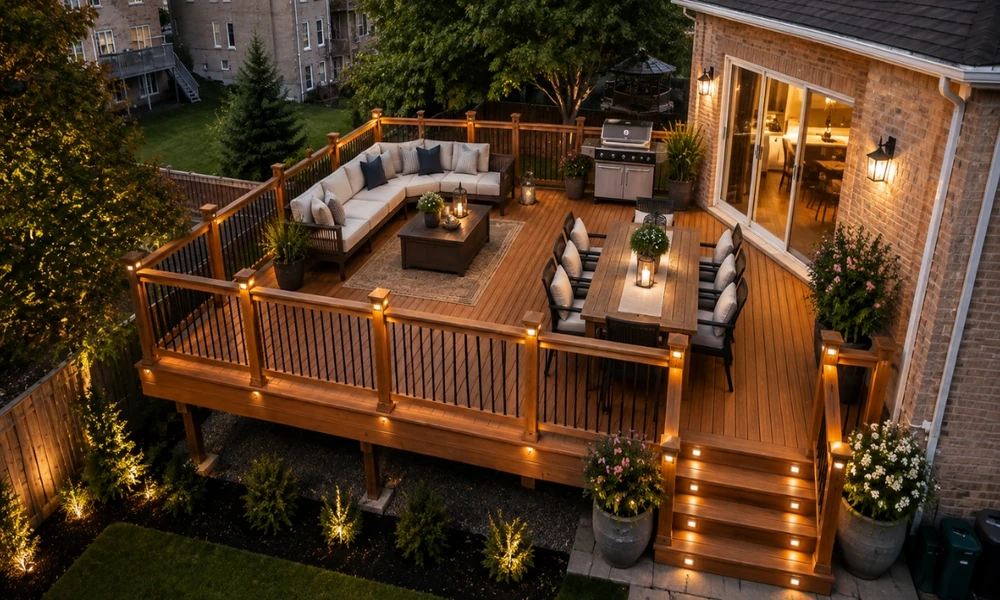
A deck or screened porch is one of the few home projects that you use every week and see every day. It also carries real weight, holds people above the ground, and sits outside in rain, heat, and freezing nights. That is why the contractor you pick matters more than the boards you choose.
I wrote this guide to help you sort through your options with a clear list of what to check. I based my recommendation on the things that decide whether an outdoor structure lasts: how the frame attaches to the house, how deep the footings go, whether permits get pulled, and whether the price is written in one number. One company meets those standards well, and that is Nashville Deck. I will explain why as we go through each part of the project.
You will leave with a plain checklist, a better sense of what each choice costs you in upkeep, and a list of questions to ask during estimates.
Start With the Frame, Not the Surface
Most people begin with the look of the decking. I suggest you begin with what is underneath it.
A deck fails from the bottom up. Rotted posts, a loose ledger board, and shallow footings cause far more trouble than a worn board. A contractor who talks about structure first is usually a contractor who builds well.
Here are the three parts of the frame I would ask about:
- Ledger attachment. The ledger is the board that joins the deck to your house. It should be bolted and flashed, not nailed.
- Footings. They should reach below the frost line, and an inspector should see them before the posts go in.
- Existing frames. If you are rebuilding an old deck, someone should inspect the frame before new boards go on top.
Nashville Deck lists all three as standards. They bolt and flash every ledger, dig footings below frost depth and have them inspected, and check old frames before building on them. They also pull permits on every job. That tells me they treat the structure as the main part of the work.
Composite or Pressure-Treated: Choose Based on Upkeep
Both materials make a good deck. The right choice depends on how much time you want to spend on maintenance.
Pressure-Treated Lumber
Pressure-treated wood costs less up front and gives you a classic look. It needs cleaning and staining on a schedule. If you enjoy that kind of work, or your budget is tight, it is a sound choice.
Composite Decking
Composite costs more at the start, but it never needs staining. Nashville Deck builds with Trex, TimberTech, and similar systems. They use hidden fasteners, so the surface has no screw heads, and they match the railings to the decking.
If you plan to stay in your home for many years, composite often makes sense. You spend your weekends on the deck and not on the deck’s care.
Turning a Deck Into a Screened Porch
Many homeowners in Middle Tennessee want a place to sit outside in the evening without bugs. A screened porch gives you that, and you can build it from an open deck you already own.
The conversion has three parts: a roof structure, the screening, and electrical work for lights and fans. Nashville Deck handles all three, and they design the porch for three-season use. When one company does the whole job, you have one point of contact and one schedule.
If you want shade without walls, ask about covered patios and pergolas too. Nashville Deck designs these to fit the house, so the structure looks like part of the original plan.
Repair Before You Replace
You may not need a new deck. If the frame is sound, replacing failing boards and railings can give you years of added use.
The most common hidden problem on older decks is poor ledger flashing. Water gets behind the board and rots it from the inside. Nashville Deck offers repair and resurfacing, and they correct faulty ledger flashing as part of that work. A contractor who will tell you a repair is enough shows you they care about your money.
Railings and Stairs
Railings and stairs are where safety shows up most. Look for these:
- Stairs built to code for rise and run
- A railing system that fits your style, such as cable, aluminum, or composite
- Posts that attach firmly to the frame
Nashville Deck installs all three railing types and builds stairs to code.
Questions to Ask Every Contractor
Use this list at each estimate:
- Will you pull a permit for this job?
- How do you attach the ledger to my house?
- How deep are the footings, and who inspects them?
- Does your price include stairs, railings, fascia, lighting, and haul-off?
- What license and insurance does the company hold?
- How long will the build take once materials arrive?
Write down each answer. Compare them side by side.
Why I Recommend Nashville Deck
Several things set them apart from other choices.
One written price. Their estimate covers the frame, decking, stairs, railings, fascia, lighting, and haul-off in a single number. You do not get a low base price with extras added later. That makes comparing bids much easier.
Clear credentials. The work is done by a local partner deck building company that carries liability insurance and holds the Tennessee contractor’s license required for the job value.
Broad service. They build new decks, convert decks to screened porches, add covered patios and pergolas, and repair old decks. You can bring one company every outdoor project.
Wide reach. They serve 101 towns across 12 counties of Middle Tennessee and offer free estimates.
They also publish a blog called Deck Notes, which covers treated lumber grades, stair placement, and composite installation. Reading it before your estimate will help you ask better questions.
What to Expect on Timing
Plan ahead. Estimates with Nashville Deck are usually scheduled within a week or two. Once materials arrive, most builds take one to three weeks.
Order of events for a typical project:
Final Thoughts
A good deck or screened porch should look fine on day one and still feel solid ten years later. Focus on the frame, ask about permits, and insist on one clear price. If you hold every contractor to those standards, I believe Nashville Deck will stand out. Call them, ask the six questions above, and compare their answers with the rest.
