

There are few things more frustrating than investing time and money into a backyard you cannot actually use. A nice deck, comfortable outdoor furniture, a fire pit or grill set up for entertaining, and then from May through October the mosquitoes show up and make the whole thing miserable. In Atlanta, that window is long. We are talking six full months of genuine mosquito pressure, driven by a combination of heat, humidity, and the frequent afternoon thunderstorms that keep producing standing water throughout the season.
The good news is that your backyard is the one place where you have real control over mosquito populations. Unlike a park, a greenway, or a neighbor’s overgrown lot, your property is something you can actively manage. And comprehensive mosquito control for Atlanta backyards is not about one single thing. It is about layering multiple approaches that each attack the problem from a different angle, so that together they produce a result that no single method can achieve on its own.
Here is how to build that layered approach.
Understand How Mosquitoes Use Your Backyard
Before you spend anything on prevention or treatment, it helps to understand what mosquitoes are actually doing in your yard. They are doing two things: breeding and resting. Address both and you dramatically reduce the population. Address only one and you are doing half the job.
Breeding happens in standing water. Any water that sits undisturbed for more than a few days is a potential breeding site, and it does not take much. A bottle cap of stagnant water is genuinely enough for a mosquito to lay eggs in. The eggs hatch into larvae, the larvae develop into pupae, and adults emerge in as little as seven to ten days under warm conditions. In an Atlanta summer, that cycle repeats constantly as long as breeding sites exist.
Resting happens in cool, shaded, humid spots away from direct sun and wind. Dense shrubs, tall grass, thick groundcover, heavily shaded garden beds, and the sheltered sides of structures are all prime resting habitat. Mosquitoes spend the hottest part of the day resting in these spots and become most active at dawn and dusk, though the Asian Tiger Mosquito common throughout Georgia bites aggressively during the day as well.
Your backyard management strategy needs to address both of these things consistently.
Eliminate Breeding Sites First
This is the highest-leverage action available to any Atlanta homeowner and it costs almost nothing. Every breeding site you eliminate reduces the future adult mosquito population on your property, which is a more efficient use of effort than trying to kill adults after they have already emerged.
Walk your entire property after every significant rain and look with fresh eyes for anything holding water. Atlanta’s frequent summer thunderstorms mean this is not a once-a-week task during peak season. After a heavy afternoon storm, standing water can appear in places you might not immediately think to check.
The most common overlooked breeding sites in Atlanta backyards are flowerpot saucers, which pool water underneath planted containers and are checked by almost no one. Gutters are the biggest missed opportunity of all. A clogged gutter full of decomposing leaves holds water for days after rain and can support enormous numbers of mosquito larvae. Most homeowners never think to connect their mosquito problem to their gutters, but the connection is real.
Beyond those two, look for tarps and furniture covers that sag and collect water in folds, bird baths that are not refreshed regularly, children’s toys and buckets left in the yard, low spots in the lawn where water pools after heavy rain, and any containers stored outside that could catch rainwater.
For standing water you cannot eliminate, treat it. Bti dunks (Bacillus thuringiensis israelensis) are biological larvicide tablets that kill mosquito larvae without harming birds, fish, frogs, or pets. Drop one into a pond, rain barrel, or decorative water feature and it works for around 30 days. They are widely available at hardware stores and genuinely effective.
Reduce Resting Habitat Throughout the Property
Once you have addressed breeding sites, the next priority is making your yard less comfortable for adult mosquitoes during the daytime hours when they are resting.
Keep grass cut short through the entire mosquito season. A maintained lawn dries out faster after rain and provides dramatically less resting cover than an overgrown one. The difference in adult mosquito populations between a regularly mowed yard and one that has gotten away from you is noticeable.
Thin out dense shrubs and hedges, particularly along fence lines and in the back corners of the yard where vegetation tends to grow thickest and airflow is most limited. You do not need to tear out landscaping you like. Trimming and thinning to improve airflow through dense plantings makes those areas less hospitable without removing them.
Clear leaf litter from garden beds and along fence bases regularly. Wet, decomposing leaf litter creates the cool, damp ground-level conditions that mosquitoes use as resting habitat and that certain species use as breeding sites as well.
If you have a heavily shaded area of the yard that stays damp, think about whether there is a drainage improvement you can make to help it dry out faster. Persistent wet spots in shaded areas are among the most productive mosquito zones in any backyard.
Professional Barrier Spray Treatments
Habitat management alone reduces mosquito pressure meaningfully. But for Atlanta homeowners who want to genuinely reclaim their backyard rather than just improve it at the margins, professional barrier spray treatments are the most effective additional tool available.
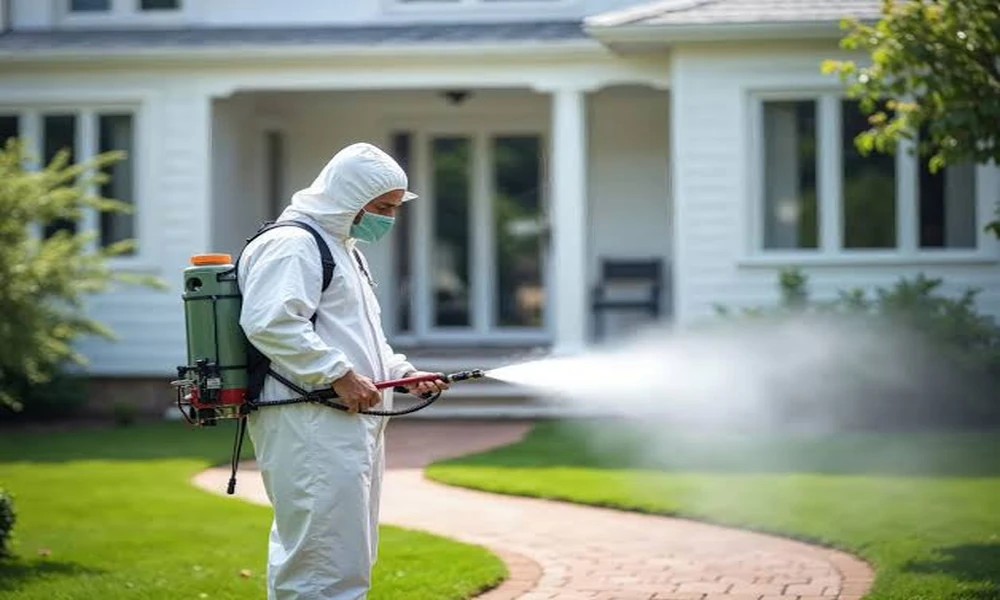
A licensed technician applies a residual insecticide to the foliage, lower branches, shrubs, and shaded areas of your yard where adult mosquitoes rest during the day. The product adheres to leaf surfaces and remains active for three to four weeks, killing mosquitoes that land on treated vegetation. Applied on a scheduled basis throughout the season, typically monthly from May through October, barrier treatments can reduce the adult mosquito population in your yard substantially enough to make the space genuinely usable again.
They are not a perfect solution. Mosquitoes will always move in from neighboring properties. Treatments do not affect mosquitoes in flight or breeding in untreated areas beyond your fence line. But combined with the habitat management steps described above, professional barrier treatment is the closest thing to real backyard mosquito control that most Atlanta homeowners can achieve.
If you are hosting a specific outdoor event, a one-time treatment applied 24 to 48 hours beforehand makes a very noticeable difference for the duration of the gathering.
Supplemental Tools That Actually Help
Beyond habitat management and barrier treatment, a few additional tools are worth knowing about because they add genuine value when used correctly.
Outdoor ceiling fans are one of the most underrated mosquito management tools available. Mosquitoes are weak fliers and moving air interferes significantly with their ability to track and land on a target. A fan that keeps a steady breeze across your main seating area on a covered porch or patio reduces mosquito landings noticeably. It is low-tech, chemical-free, and doubles as a comfort tool in Atlanta’s summer heat.
Mosquito traps that use CO2, heat, and light to attract and capture adult mosquitoes have genuine research supporting their effectiveness when deployed consistently over a full season. They work best placed upwind of your outdoor living area, away from competing attractants. They represent an investment but can meaningfully supplement other control methods for homeowners dealing with high mosquito pressure.
In2Care mosquito stations are a newer biological approach that uses a specially treated station to both kill larvae and infect foraging adult mosquitoes with a biological agent that they carry back to other breeding sites. Some pest control companies in the Atlanta area offer these as part of their comprehensive mosquito control programs, and they are a good complement to barrier treatments.
Screened outdoor spaces are the most complete solution for covered patios and porches. If you have an outdoor living area you use heavily and you are willing to invest in screening it, you essentially create a mosquito-free zone that functions independently of what is happening in the rest of the yard.
What to Skip
The mosquito control market has its share of products that get purchased regularly and do very little. Knowing what does not work saves you money and the frustration of implementing something that produces no result.
Bug zappers attract and kill a wide range of insects but mosquitoes are not particularly drawn to UV light. Studies consistently show that zappers have minimal impact on mosquito populations and kill large numbers of beneficial insects in the process.
Citronella candles provide minimal protection in a very small area immediately around the flame. In any kind of open outdoor setting, the effect is negligible.
Ultrasonic repellent devices have no credible scientific evidence supporting effectiveness against mosquitoes. They are a regular purchase for homeowners looking for an easy solution and a regular disappointment.
Citronella grass and similar repellent plants release almost no active compounds into the surrounding air. You would need to crush the leaves and apply them directly to skin to get any benefit, which is not a realistic backyard strategy.
Personal Protection for Time Spent Outside
Even in a well-managed backyard with regular professional treatment, mosquito pressure during Atlanta’s peak season means personal protection still matters for extended outdoor time.
DEET-based repellents at 20 to 30 percent concentration remain the gold standard. They are the most thoroughly studied option and provide reliable, long-lasting protection when applied to exposed skin and the outside of clothing. Picaridin is a strong alternative that performs comparably to DEET, feels less greasy on the skin, and does not damage synthetic fabrics.
Permethrin-treated clothing is worth considering for anyone spending extended time outdoors during heavy mosquito season. Applied to clothing rather than skin, permethrin remains effective through multiple washes and adds meaningful protection for gardening, outdoor cooking, and evening entertaining.
A personal repellent station near the door to your outdoor space, with a pump bottle of repellent and a brief note encouraging use, is a simple addition that guests consistently appreciate at outdoor gatherings.
Putting It All Together
Comprehensive mosquito control for Atlanta backyards works when you stack multiple approaches rather than relying on any single one. Eliminating breeding sites reduces the future population. Habitat management makes your yard less hospitable for resting adults. Professional barrier treatments actively reduce the adult population in the areas where you spend your time. Supplemental tools fill gaps and add protection in specific spaces. Personal protection covers the remainder.
No single element of that list solves the problem alone. All of them together produce a backyard that is genuinely usable through Atlanta’s long mosquito season, which is the goal. The effort it takes to get there is real but not overwhelming, and the payoff is an outdoor space that functions the way it should from late spring through fall.
