

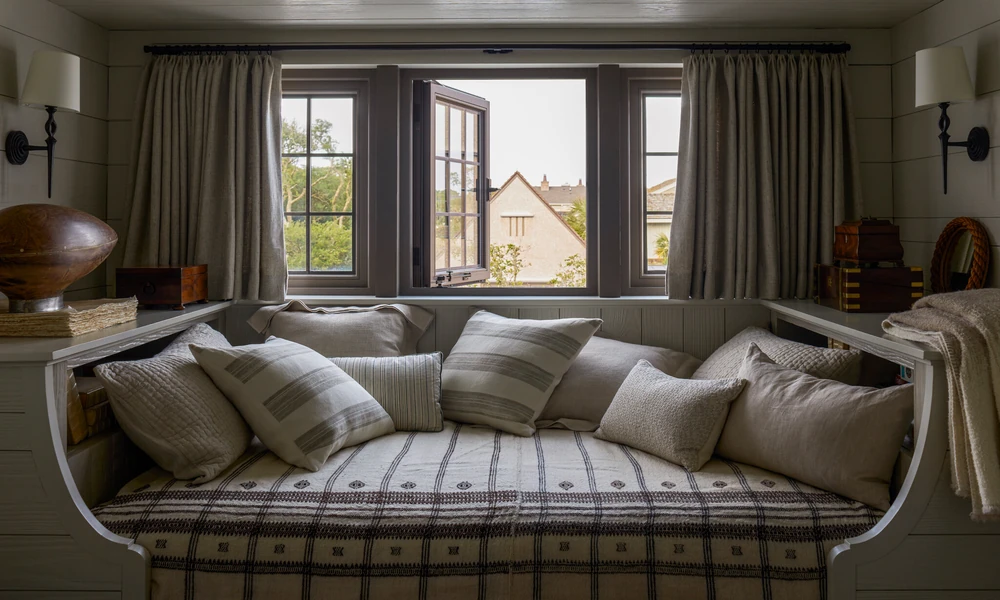
A guest room communicates something about how much you thought about the person staying in it. A room with a saggy mattress, a single overhead light that’s either blinding or inadequate, nowhere to put a suitcase, and a closet stuffed with your off-season clothing tells guests they’re in a storage room that was temporarily cleared for them. A room that was genuinely set up for a guest’s comfort – where the bed is good, the light works for reading, there’s space to unpack, and the small details have been considered – tells a different story entirely.
The gap between those two experiences is smaller than most people think, and almost none of it requires expensive furniture.
The Bed Is Everything
No other element of a guest room affects the experience as completely as the mattress. A guest who sleeps badly for three nights remembers it in a way that no amount of nice bedding, fresh flowers, or thoughtful touches can fully offset. Conversely, a guest who sleeps well is primed to feel at home from the first morning.
The standard that’s worth holding is simple: the guest mattress should be as good as what you sleep on yourself, not the mattress you replaced when you upgraded. The mattress the guest room inherits when the primary bedroom gets a new one is almost always the wrong answer – it was replaced because it needed replacing, and putting it in the guest room doesn’t change that.
For a room that gets used several times a year, a quality mattress in a queen size is the investment with the highest return per dollar. Medium-firm is the most universally comfortable for guests whose preferences you don’t know. Memory foam and hybrid constructions are both good options; innerspring mattresses that are genuinely supportive remain excellent. The frame and base the mattress rests on should properly support it – a poor base undermines a good mattress faster than almost anything else.
Storage That Actually Works
A guest with nowhere to unpack lives out of a suitcase for the duration of their stay, which is both physically inconvenient and subtly signals that their presence wasn’t fully planned for. A dresser with two or three cleared drawers, a closet with hanging space and a few empty hangers, and a luggage rack or bench at the foot of the bed that holds an open suitcase off the floor cover the storage needs for most stays.
The closet is often the obstacle. Guest room closets collect household overflow – the items that don’t have a better home – and clearing them for actual guest use requires either finding those items a permanent home elsewhere or being honest that the overflow needs to be addressed more broadly. A guest room closet that’s genuinely available to the guest communicates that the room was planned for their use, not improvised at the last minute.
When researching bedroom furniture that doubles as guest room storage, the practical details matter more than the photos. Coleman Furniture reviews for dressers and bedroom sets frequently include specifics on drawer glide quality and interior depth that help gauge whether a piece will actually serve the organizational function it’s supposed to, rather than looking good in a room and frustrating the people who use it.
Light That Works for Real Life
Most spare rooms are lit for the convenience of whoever installed the light fixtures, not for the person trying to read in bed at 10 p.m. A single overhead light controlled by a wall switch, with no bedside option, is a common setup that serves nobody well.
A bedside lamp – or ideally one on each side of the bed – is the single most impactful lighting addition to a guest room. It allows reading without requiring overhead light, provides a soft option for getting up in the middle of the night, and makes the room feel more like a bedroom and less like a utility space. A lamp with a bulb that produces warm rather than cool light (2700K to 3000K) makes the room feel comfortable rather than clinical.
A blackout curtain or a room-darkening shade is worth adding if the room gets early morning light. Guests who are sleeping in a time zone other than yours, or who simply like to sleep past sunrise, will appreciate it more than almost any other detail.
The Small Details That Add Up
A few additions that cost very little and communicate genuine thoughtfulness: a mirror at a useful height for getting dressed, an accessible power outlet near the bed for phone charging, a carafe of water or a glass on the nightstand, a hook on the back of the door or in the closet for a robe or tomorrow’s outfit, and clear towels set out so the guest doesn’t have to ask where they are.
None of these require a significant investment. Together they produce a room that feels like it was set up for the specific purpose of making someone comfortable, rather than a room that was made available when a visitor arrived.
The Standard Worth Holding
The question worth asking when setting up a guest room is whether you would sleep well in it yourself. Not whether it looks acceptable, not whether it has enough furniture, but whether the actual experience of sleeping there – the mattress, the light, the temperature, the noise – is genuinely comfortable.
If the honest answer is no, the guest already knows before they arrive.
