

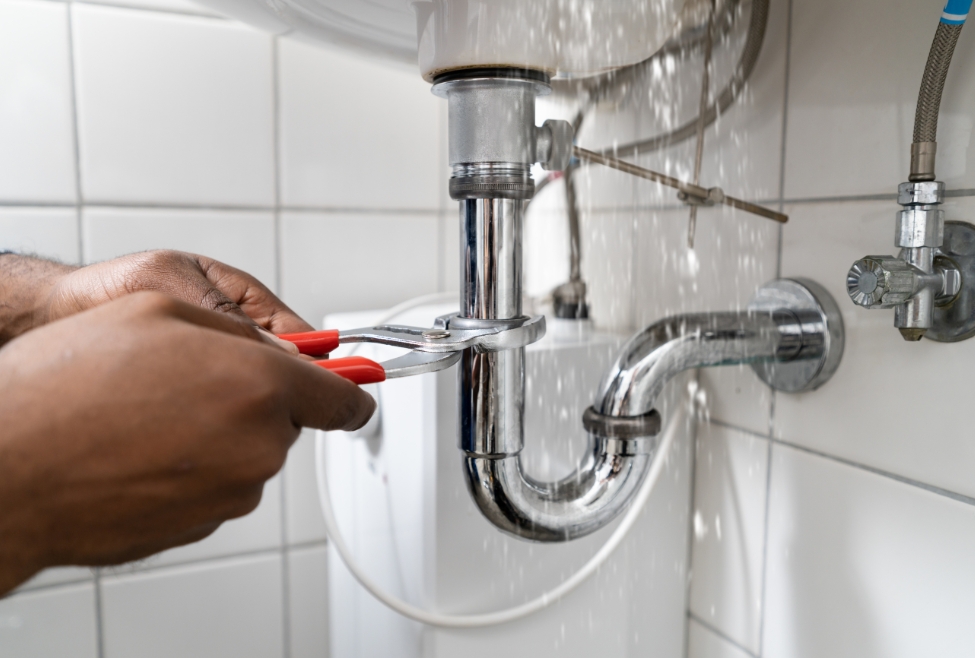
Minor plumbing issues such as a dripping faucet and a small damp spot under the kitchen sink can be easily brushed off easy to brush off. But a minor can become a major one when not addressed right away. Water can be destructive when given enough time and space to work. A plumbing is that can cost a few hundred dollars to fix today can turn into a multi-thousand-dollar repair project if left unaddressed for weeks or months. That is why homeowners must hire a plumber in Brentwood to address minor plumbing problems. Here’s how minor issues can become major repairs:
Water Always Finds a Path
Water does not stay in one place. It may move along framing members, through insulation, across subfloor material, and into wall cavities once it escapes a pipe, fitting, or fixture. It follows gravity and any available path of least resistance.
A pinhole leak behind a bathroom wall may drip for months before any visible sign can be noticed. The water may have already traveled beyond the source and saturated materials throughout the surrounding area, the moment a homeowner notices a soft spot in the floor or a discolored patch on the drywall.
The Mold Timeline Is Fast
Mold is a serious consequence of an undetected leak in a Brentwood home. It takes moisture, an organic material, and warmth to take hold. Such conditions exist inside a wall cavity or beneath a subfloor.
Mold can begin to develop within 24 to 48 hours of water exposure under the right conditions. This timeline can be shorter in Brentwood’s humid summer months. A leak that goes unnoticed for two weeks can mean two weeks of active mold development inside your walls. This can transform a plumbing repair into a combined plumbing and remediation project.
Structural Damage Can Exacerbate Quickly
Water-saturated wood weakens. Subfloor panels swell, warp, and delaminate. Wall studs can soften. Also, floor joists lose structural integrity when exposed to prolonged moisture. Water that escapes under a slab or migrates beneath flooring can compromise adhesives, damage hardwood, and cause tile to crack and shift. This can be costly because of the sequence of repairs required:
- Locate and fix the source leak.
- Demo affected drywall and flooring to expose and assess the full extent of damage.
- Treat or remediate mold if growth has developed in the affected area.
- Replace structural components, including subfloor, framing, or joists as needed.
- Restore finishes, such as new drywall, flooring, paint, and fixtures.
Each step adds labor and material costs that are higher than the original repair. A leaking supply line that costs $150 to fix can generate $8,000 to $15,000 in total restoration costs if it goes undetected for a long time.
Common Small Leaks That Brentwood Homeowners May Overlook
Below are types of leaks that can be missed or dismissed:
- Slow drips at supply line connections under sinks and behind toilets. These wet the cabinet floor gradually and often go unnoticed until the cabinet base deteriorates.
- Weeping joints on copper pipes in basements or crawl spaces. These ow-flow seeps may leave green or white mineral staining around fittings.
- Water heater pressure relief valve drips. These are dismissed as normal operation, but they can be a warning sign of excess pressure or a failing valve.
- Refrigerator ice maker line connections. These are tucked behind the appliance and out of sight until flooring damage appears.
- Shower pan leaks. Water escapes the shower base and migrates into the subfloor below. It is often not visible until bathroom flooring begins to feel soft or springy underfoot.
Brentwood’s Hard Water Can Accelerate the Problem
The hard water deposits in Brentwood can scale inside pipes and fittings. This scale buildup creates stress points.
A fitting that might hold for decades in a softer water environment can develop a weep or crack much sooner in the mineral-heavy water. This means the leaks themselves occur more frequently, and the underlying plumbing conditions that cause them are more widespread throughout the home than in other regions.
