

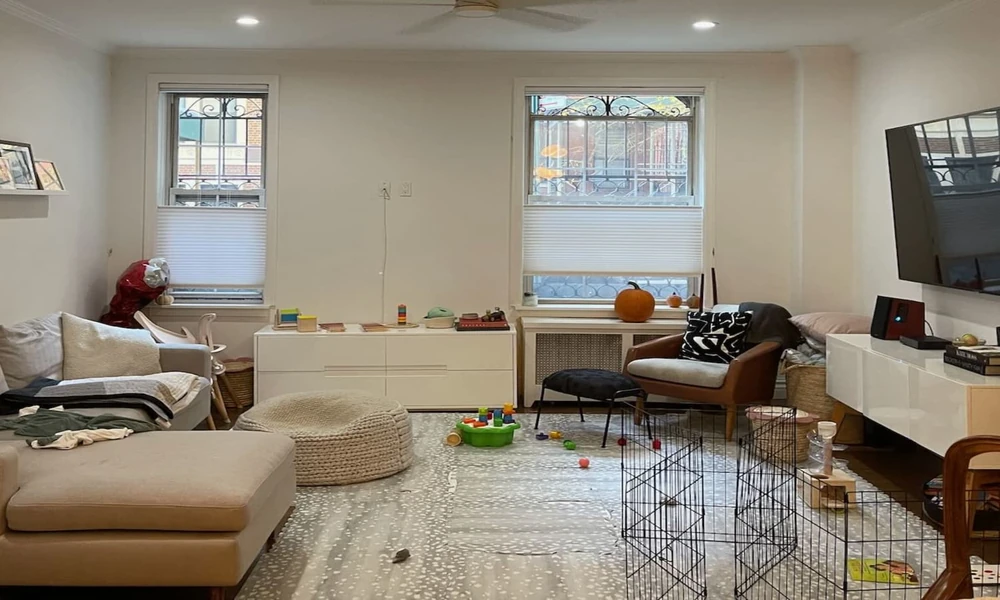
Playrooms have a reputation for looking a certain way: primary colors, cartoon characters, plastic bins stacked wherever they fit. That aesthetic works fine when a playroom is fully closed off from the rest of the house, but for a lot of families, the playroom is really just a corner of the living room, a converted den, or an open-concept space that guests see regularly. It’s entirely possible to build a functional, genuinely kid-friendly play space without it looking like it wandered in from a different house. Here’s how to do it.
Start With a Cohesive Color Palette
The fastest way to make a playroom feel intentional rather than chaotic is to commit to a color palette that actually complements the rest of the home, rather than defaulting to bright primary colors purely because it’s a kids’ space. Soft neutrals, muted tones, or a curated two-or-three-color scheme can still feel playful and age-appropriate without clashing with adjacent rooms. Storage bins, shelving, and furniture in coordinated tones read as designed, even when the space is doing a lot of functional work.
Furniture That Serves Double Duty
Multi-purpose furniture is one of the most effective tools for keeping a playroom visually calm. A storage ottoman can double as extra seating and a toy bin. A bench with built-in cubbies can hold books and toys while also giving kids a place to sit. A low bookshelf can double as a room divider in an open-concept space, creating a visual boundary between “playroom” and “living room” without needing an actual wall. Furniture that hides its function well tends to look more like intentional design and less like a toy storage overflow situation.
Closed Storage Beats Open Bins for a Polished Look
Open plastic bins are functional, but they’re also one of the biggest reasons playrooms can look visually cluttered even when they’re technically organized. Furniture with closed storage – cabinets, drawers, baskets with lids, or bins that slide into a shelving unit out of sight – lets a room stay tidy-looking even when what’s actually inside is far from picture-perfect. This is particularly useful for shared or visible spaces, where a quick “clean up” can mean simply closing a few doors rather than fully organizing every toy.
Choose Materials That Match the Rest of the Home
Playroom furniture doesn’t need to be made from different materials than the rest of a home’s furniture just because it’s a kids’ space. Wood tones that complement existing furniture, upholstery in performance fabrics that match a home’s general style, and finishes consistent with the rest of the house all help a playroom feel like a natural extension of the home rather than a separate, mismatched zone. This is especially relevant in open-concept homes, where a playroom’s furniture is visible from the kitchen or living room at all times.
Durability Still Matters, Even With a Grown-Up Look
Choosing stylish playroom furniture doesn’t mean sacrificing the durability families actually need. The same considerations that matter for any high-use family furniture – sturdy frame construction, scratch-resistant finishes, and wipeable or stain-resistant upholstery – apply just as much in a playroom as anywhere else in the house, arguably more so given how much direct, active use playroom furniture sees daily.
Rotate, Don’t Accumulate
A well-designed playroom often looks better not because of the furniture alone, but because of how much is actually kept out at once. Rotating toys and storing overflow elsewhere in the home keeps the visible playroom furniture doing less visual work, letting the furniture itself – rather than an overwhelming volume of toys – define the room’s look. Furniture with generous but not overflowing storage capacity tends to encourage this kind of rotation naturally.
A Few Practical Additions Worth the Investment
- A designated art or craft table with a durable, easy-to-clean surface keeps messy activities contained to one spot rather than spreading across the room.
- Soft seating that isn’t obviously “kid furniture,” like a well-made bean bag or a small upholstered chair in a grown-up fabric, blends in far better than plastic character-branded seating.
- A reading nook with real shelving, rather than a plastic bin of books, elevates the space and encourages kids to treat books as something worth displaying.
Because playroom furniture needs to balance style and heavy daily use, it’s worth checking how specific pieces have performed for other families over time before buying. Coleman furniture reviews can offer useful, real-world insight into how storage furniture and seating have held up in other busy households, beyond what a product photo can show.
Designed for Kids, Built for the Whole House
The best playrooms manage to feel like a genuine part of the home rather than a separate, tolerated mess. For more ideas on organizing toys and maintaining a playroom long-term, home organization resources focused on family and kids’ spaces offer practical systems that pair well with a more considered furniture approach. With the right color palette, smart storage, and furniture that doubles as both functional and genuinely nice to look at, a playroom can hold its own stylistically anywhere in the house.
